
By Ricardo Santana; eSolution Hosting
There are a lot of sites out there that lets you publish your own website, for free, and without a domain name. However, it's to your advantage to own a domain name for your site, and here's some of the reasons why:
• Owning a Domain name gives you more credibility, separating you from scammers. The problem with "free" websites without a domain name is that people with the intention to commit fraud can create multiple free websites. So, having a domain name sets you apart and makes you appear more legit.
• It helps you to better brand yourself or your business.
• Helps you rank higher in the search engines.
• You can create a professional email account.
Get started today with one of our affordable Web Hosting plans and take advantage of our 30-days free trial!
By: Ricardo Santana
Updated November 2026.
Most websites do fine on shared hosting. But some sites outgrow it, and for them there is a top step: a dedicated server, a whole physical server for one customer and nobody else. This article explains what that means, what it does for a site, and who honestly needs one.
What Is a Dedicated Server?
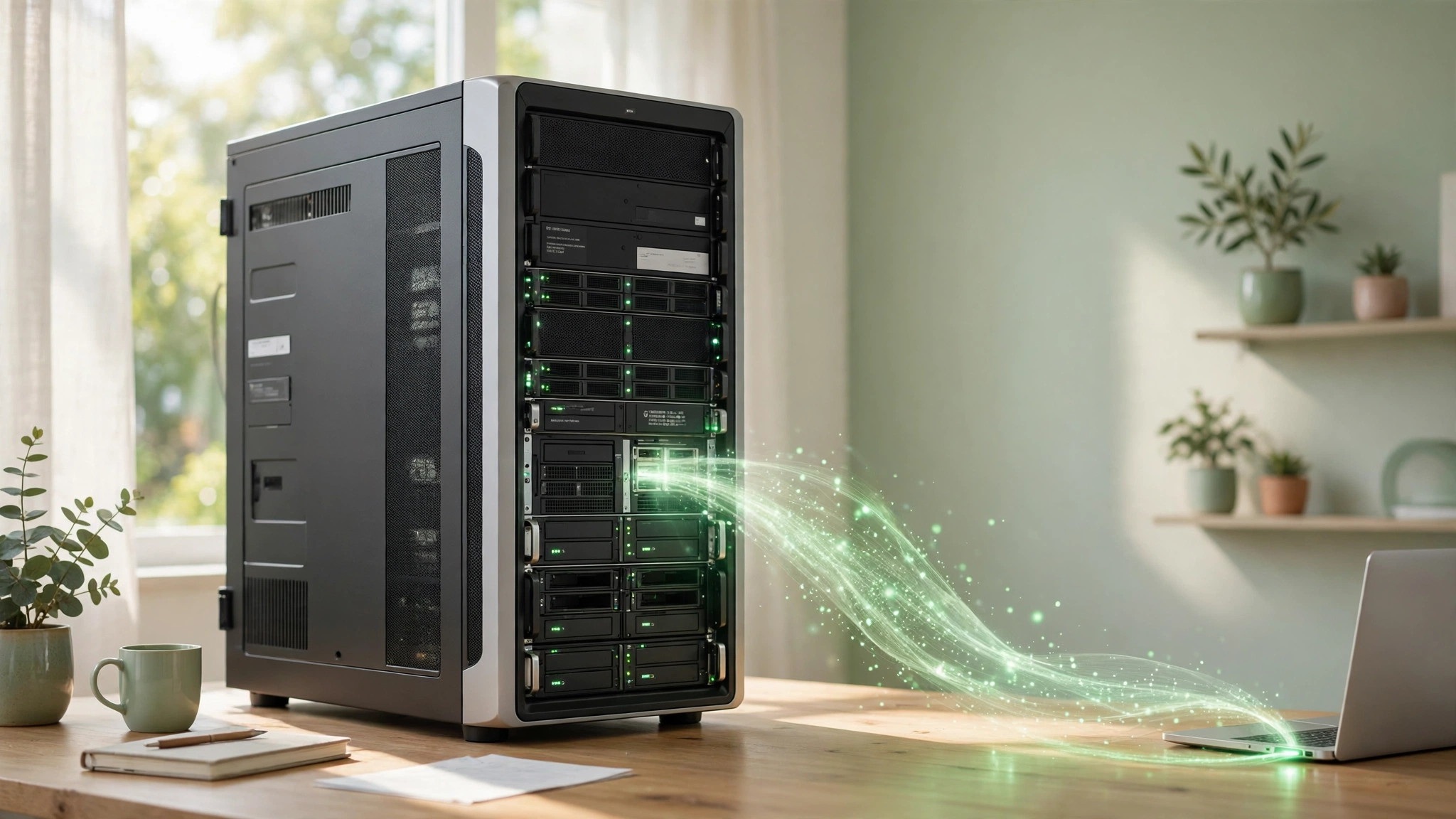
A dedicated server is a physical server that belongs to a single client. With shared hosting, many websites share one machine. With a VPS, you get a reserved slice of a machine. With a dedicated server, you get the entire machine: all of its processing power, memory, and storage are yours alone. You control the configuration, the operating system, and the security setup.
Benefits of Dedicated Servers
- Performance: There are no neighbors using your resources, so your site keeps its speed even at busy times.
- Control: Choose the operating system and the software, and configure the server to fit your exact needs.
- Security: The machine is yours alone. No other customers are on it, and you decide the security measures.
- Reliability: Dedicated resources mean steadier performance and uptime, which matters for a business that cannot afford downtime.
- Room to grow: As your needs grow, the hardware can be upgraded with them.
Who Needs One, and Who Does Not
A dedicated server is a good fit for a high-traffic website, a busy online store, a resource-heavy application, or a business with strict security needs.
Here is the honest part. If you run a small business website, a church website, or a blog, you almost certainly do not need a dedicated server. Shared hosting or semi-dedicated hosting will cover you for far less money, and I would rather sell you the plan that fits than the plan that costs the most.
My dedicated servers run from $70 a month for an entry-level machine up to $420 a month for a 64-core server with 256 GB of RAM. See the dedicated server plans here.
The Bottom Line
A dedicated server is the most powerful hosting there is, and for the right website it is worth it. The key is matching the hosting to what your site actually needs today. If you are not sure which step fits your site, ask me and I will give you a straight answer.
Questions? Reach me at rick@esolutionhosting.com.

By: Ricardo Santana
Updated November 2026.
If you want a website, you need two things. You need a domain name, which is your address on the internet, and you need web hosting, which is the place your website actually lives. This guide covers hosting in plain English: what it is, the main types, and how to pick the right one.
What Is Web Hosting?
Every website is made of files: pages, pictures, and information. Those files have to sit on a computer that stays on and connected to the internet all the time. That computer is called a server. A web hosting company keeps the servers running so people can visit your site day or night. When someone types in your domain name, the internet sends them to the server where your files are stored, and your site appears on their screen.
The Main Types of Hosting
Shared hosting. This is where most people start, and it is the most affordable option. Many websites share one server, which keeps the cost down for everybody. It is a good fit for a new business site, a church, a nonprofit, or a personal site. The trade-off is that you share the server's power with others, so a very busy site can outgrow it. My shared plans start at $5.25 a month, include email accounts on your own domain, and come with a 30-day free trial. Read more about shared hosting here.
WordPress hosting. A large share of websites run on WordPress. If yours does, look for hosting that installs WordPress in one click and keeps it running smoothly. See the WordPress hosting plans here.
VPS hosting. VPS stands for Virtual Private Server. Your site still shares a physical server, but a set portion of that server is reserved for you alone. That means more power, more control, and room to grow. It is a good step up for a site that is getting busy. Read more about VPS hosting here.
Semi-dedicated hosting. This is the middle step between shared hosting and a full server. Your site shares a server with only a small number of other sites, so you get much more of the server's power without the cost of the whole machine. Plans start at $35 a month. Read more about semi-dedicated hosting here.
Dedicated hosting. With dedicated hosting, the entire server is yours. Nothing is shared. This gives you the most power and control, and it costs the most, so it is mainly for large businesses and high-traffic websites. Read more about dedicated hosting here.
Cloud hosting. Cloud hosting spreads a website across several servers working together. If one server has a problem, another picks up the work, which keeps the site online. It is also easy to scale up as traffic grows. For most beginners, a shared plan is the practical place to start, and you can move up when your site needs more.
Why Hosting Matters
- Performance. Good hosting keeps your site fast. People leave slow sites, and search engines rank them lower.
- Security. A good host helps protect your site with SSL certificates, firewalls, and backups.
- Support. Sooner or later you will have a question. My customers get tech support 24/7 through my hosting partner's team, and account questions come to me personally.
- Room to grow. The right host lets you start small and upgrade as your site grows, without moving everything somewhere else.
One More Thing: The Free Domain
Every hosting plan I sell includes one free domain registration when you sign up, from a list of extensions that includes .us, .online, .site, and .website. The full list is on the plans page, and renewals are at the regular price. I would rather tell you that up front than have you find out later.
The Bottom Line
You do not need the biggest plan to start. You need a plan that fits where your site is today, from a host you can actually reach when you need help. Start where you are, and upgrade when you grow into it. That is what I help people do at eSolution Hosting, right here in Joliet.
Questions? Reach me at rick@esolutionhosting.com.